
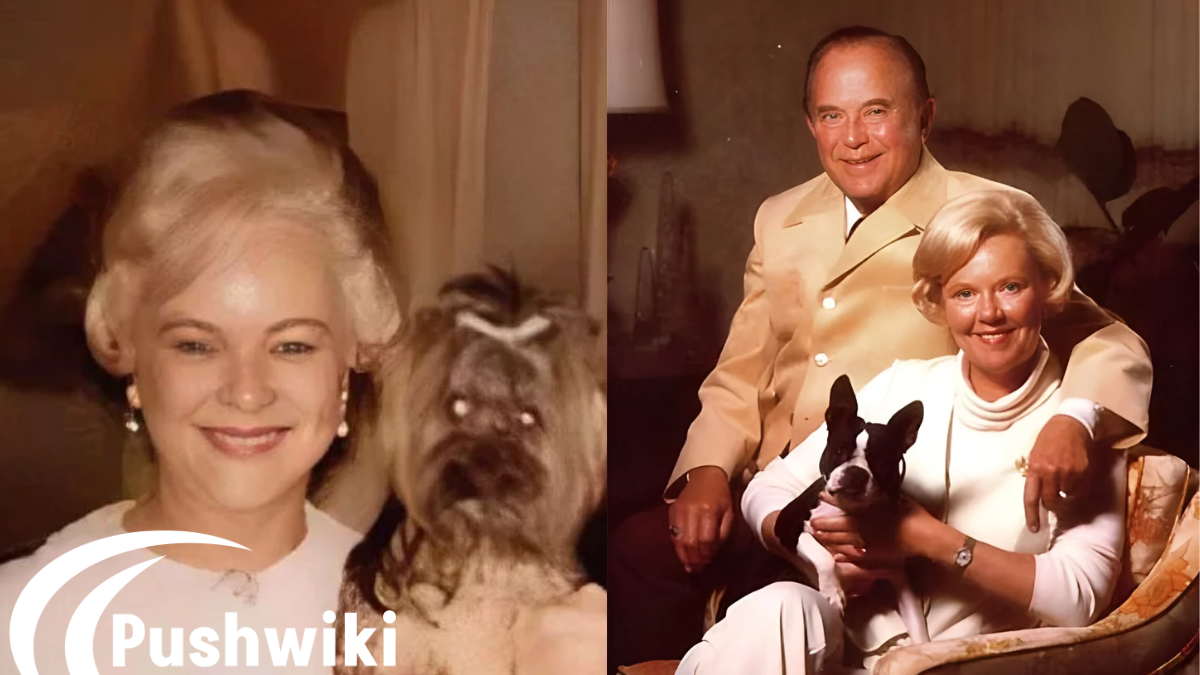

Explore the life of Jane Dobbins Green, Ray Kroc’s second wife, alongside Ethel Fleming and Joan Kroc. Discover financial settlements, relationship timelines, and corporate history behind McDonald’s growth.
The expansion of McDonald’s from a single San Bernardino hamburger stand into a global fast-food conglomerate is widely recognized as one of the most successful business transformations in corporate history. However, behind the multi-billion-dollar empire built by Raymond Albert Kroc lies a complex web of personal relationships that directly shaped his entrepreneurial journey. While business histories often emphasize franchise models, real estate strategies, and operational efficiencies, Kroc’s personal life was marked by three distinct marriages—each reflecting a different chapter in his rise to power.
Among these figures, Jane Dobbins Green occupies a fascinating yet frequently overlooked position. As Ray Kroc’s second wife during the mid-1960s—a period of rapid financial scaling and strategic consolidation for McDonald’s—Jane bridged the gap between Kroc’s long first marriage to Ethel Fleming and his high-profile final marriage to Joan Kroc. Understanding Jane Dobbins Green, alongside Ethel Fleming and Joan Kroc, offers valuable insights into how executive ambition, personal sacrifices, and spousal dynamics intersect with corporate creation.
Introduction: Why Jane Dobbins Green and the McDonald’s Personal History Matter
When examining corporate leadership, personal relationships are rarely incidental; they frequently dictate risk tolerance, geographic moves, and emotional resilience. For Ray Kroc, who was over 50 years old when he partnered with Richard and Maurice McDonald in 1954, his business ventures created immense interpersonal friction.
The study of Jane Dobbins Green and Kroc’s broader marital history matters for several key reasons:
- The Human Element of Corporate Scaling: Ray Kroc’s relentless drive required sacrifices that alienated family members while drawing in partners who matched his vision or provided temporary emotional stability.
- Financial and Legal Precedents: High-stakes divorces during the early days of McDonald’s posed real threats to Kroc’s liquidity and capital structures.
- Public Perception vs. Historical Accuracy: Hollywood adaptations like the 2016 film The Founder condensed or reconfigured several real-life figures, creating widespread curiosity about who was Ray Kroc’s second wife and what truly happened off-screen.
Understanding Jane Dobbins Green requires placing her within the full timeline of Ray Kroc’s personal life, from his initial struggles as a Multimixer salesman to his status as a legendary industrial titan.
Who Was Ray Kroc’s Second Wife? The Life of Jane Dobbins Green
Early Background and Profile
When asking who was Ray Kroc’s second wife, the answer leads to Jane Elizabeth Dobbins (later known as Jane Dobbins Green). Investigating Jane Dobbins Green young, archives show she was born in 1911 in Walla Walla, Washington, to David and Grace Dobbins. Regarding the frequent inquiry about Jane dobbins green birthday, historical records place her birth year in 1911 in the Pacific Northwest.
Before meeting Kroc, Jane lived a life steeped in classical West Coast sophistication. She worked as the executive secretary for legendary Hollywood actor John Wayne. Contemporaries described her as an elegant, petite blonde with a gentle, compliant demeanor—a striking contrast to the assertive personalities Kroc often encountered in business. In his autobiography Grinding It Out, Ray Kroc compared her quiet grace to actress Doris Day, noting her sweet disposition and agreeable nature during a turbulent period in his corporate career.
Meeting and Marriage to Ray Kroc
Ray Kroc met Jane Dobbins Green in California in 1963 through mutual acquaintances, shortly after his divorce from his first wife, Ethel Fleming. At the time, Kroc was experiencing intense emotional loneliness following an aborted attempt to marry Joan Mansfield (who had initially chosen to stay with her husband, Rawland Smith).
Seeking stability and companionship, Kroc married Jane in 1963. Their marriage lasted five years, spanning 1963 to 1968. During this period, McDonald’s was expanding aggressively across North America, transitioning from a regional franchisor into a publicly traded Wall Street powerhouse.
Ray Kroc’s First Wife Ethel Fleming: The Early Years and Marriage
To understand the context of Kroc’s second marriage, one must first look at his origins with his first wife, Ethel Fleming (often referred to in records as Ethel Kroc).
Ray Kroc's Marital Timeline:
┌───────────────────────────┬───────────────────────────┬───────────────────────────┐
│ Ethel Fleming             │ Jane Dobbins Green        │ Joan Mansfield Smith      │
│ Married: 1922             │ Married: 1963             │ Married: 1969             │
│ Divorced: 1961            │ Divorced: 1968            │ Widowed: 1984             │
└───────────────────────────┴───────────────────────────┴───────────────────────────┘
Early Partnership and Family Life
Ray Kroc met Ethel Fleming in 1919 shortly after World War I. The couple married in 1922 and settled in Chicago. Together, they had one child—a daughter named Marilyn Kroc.
For over three decades, Ethel supported Ray through various economic hardships. During the 1920s and 1930s, Ray worked a grueling array of jobs, including playing piano in radio bands, selling paper cups for the Lily-Tulip Cup Company, and peddling Prince Castle Multimixers to drive-in restaurants across America.
Growing Rift over Risk and Security
As Ray approached his fifties, Ethel anticipated a quieter life focused on financial security and retirement. However, when Ray discovered the McDonald brothers’ original hamburger stand in San Bernardino in 1954, he mortgaged his home and pledged his personal assets to secure the franchising rights.
Ethel was deeply skeptical of this high-risk gamble. The fundamental disagreement between Ray’s relentless expansionist ambition and Ethel’s desire for conventional stability created an unbridgeable distance in their marriage.
Did Ray Kroc Leave His Wife? The Breakdown of the First Marriage
A central question regarding Kroc’s personal history is: Did Ray Kroc leave his wife?
The short answer is yes. Ray Kroc initiated the end of his 39-year marriage to Ethel Fleming, filing for divorce in 1961. The primary drivers of this separation were twofold:
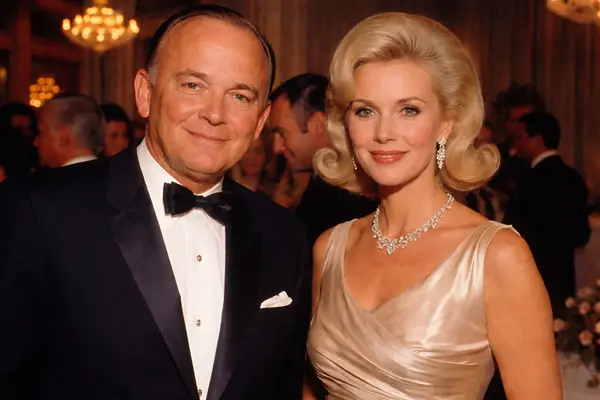
- Total Business Obsession: Kroc’s life revolved entirely around McDonald’s. He worked 18-hour days, traveled constantly to oversee franchise openings, and expected total dedication to the brand. Ethel found this lifestyle draining and unnecessary, leading to frequent conflicts.
- Infatuation with Joan Mansfield: In 1957, while attending a business meeting at the Criterion Restaurant in St. Paul, Minnesota, Ray met Joan Mansfield. Joan was playing piano at the venue, and Ray was instantly smitten. Although both were married at the time, their relationship developed into a long-term emotional affair that eroded Ray’s commitment to his marriage with Ethel.
By 1961, following Ray’s decisive $2.7 million buyout of the McDonald brothers, he finalized his divorce from Ethel Fleming.
Did Ray Kroc’s First Wife Get Anything? The Financial Settlement
When high-profile executive divorces occur, public interest inevitably focuses on the financial distribution. Readers frequently ask: Did Ray Kroc’s first wife get anything? and Did Ray Kroc’s first wife get any money?
The Divorce Settlement
Yes, Ethel Fleming received a substantial settlement in their 1961 divorce. Although McDonald’s was growing rapidly in 1961, Ray Kroc was heavily leveraged with debt due to buying out Dick and Mac McDonald. Nonetheless, the court settlement ensured Ethel was financially secure for life.
The 1961 settlement included:
- Alimony Payments: Ethel received a guaranteed $30,000 per year for life—a substantial figure in 1961 (equivalent to over $300,000 annually in modern purchasing power).
- Real Estate and Assets: Ethel was awarded the couple’s primary residence, their automobile, and various personal assets.
- Insurance Policies: Ray maintained life insurance policies designating Ethel as the beneficiary to guarantee her long-term protection.
What Happened to Ray Kroc’s First Wife Ethel Fleming?
To answer what happened to Ray Kroc’s first wife Ethel Fleming: after the divorce was finalized in 1961, Ethel retired from public life. She lived comfortably in California on her alimony and asset settlement until her death in 1984—coincidentally the exact same year Ray Kroc passed away.
The Interlude: Ray Kroc, Jane Dobbins Green, and the Mid-1960s Transition
Following his 1961 divorce from Ethel, Ray expected to marry Joan Mansfield immediately. However, Joan initially backed away from leaving her husband, leading to a temporary break between them.
Enter Jane Dobbins Green.
Key Milestones of Jane Dobbins Green's Era (1963–1968):
┌────────┬────────────────────────────────────────────────────────────────────────┐
│ Year   │ Milestone                                                              │
├────────┼────────────────────────────────────────────────────────────────────────┤
│ 1963   │ Marries Ray Kroc in California after introduction by mutual friends    │
│ 1965   │ McDonald's goes public on the New York Stock Exchange (NYSE)           │
│ 1967   │ McDonald's opens its first international locations (Canada & Puerto Rico)│
│ 1968   │ Ray and Jane divorce as Ray reconnects with Joan Mansfield Smith       │
└────────┴────────────────────────────────────────────────────────────────────────┘
During their five-year marriage, Jane provided a peaceful domestic environment while Ray managed the corporate growth of McDonald’s. However, Ray acknowledged in his autobiography that he never fully stopped thinking about Joan. In 1968, when Joan re-entered Ray’s life, Ray and Jane Dobbins Green divorced amicably. Jane received a private financial settlement and returned to a quiet personal life in California.
Joan Kroc and Rawland Smith: The Alternate Parallel Track
To fully grasp why Jane Dobbins Green’s marriage to Ray ended, one must examine the parallel lives of Joan Kroc and her first husband, Rawland Smith.
Who Was Rawland Smith?
Rawland Smith was a World War II Navy veteran and a fast-food entrepreneur. In the late 1950s, Rawland became one of Ray Kroc’s early franchisees, securing the rights to operate McDonald’s locations in Minnesota and South Dakota. Joan handled much of the operational work for their stores, gaining firsthand experience in the restaurant industry.
The Reconnection and 1969 Marriage
Despite both being married to other people—Joan to Rawland Smith and Ray to Jane Dobbins Green—Ray and Joan maintained contact over the years. In 1968, Joan telephoned Ray, leading to an emotional reunion.
Both obtained divorces from their respective spouses. In 1969, Ray Kroc married Joan Mansfield Smith. They remained together until Ray’s death in 1984. Following Ray’s passing, Joan inherited his estate and became one of the most prominent philanthropists in American history, donating over $2 billion to causes including National Public Radio and The Salvation Army.
Jane Dobbins Green in ‘The Founder’: Cinematic Portrayal vs. Historical Reality
The 2016 biographical drama The Founder, starring Michael Keaton as Ray Kroc, brought McDonald’s origin story to a modern global audience. However, viewers interested in Jane Dobbins Green in The Founder often express confusion after watching the film.
Why Was Jane Dobbins Green Omitted from the Movie?
In The Founder, the narrative focuses primarily on two women:
- Ethel Fleming (played by Laura Dern), depicting Kroc’s first marriage and early financial struggles.
- Joan Smith (played by Linda Cardellini), depicting his late-life romance and corporate partnership.
Screenplay vs. Historical Reality:
┌─────────────────────────┬───────────────────────────────────────────────────────┐
│ Cinematic Narrative     │ Streamlines timeline: Ray moves directly from Ethel    │
│ (The Founder, 2016)     │ to Joan to maintain dramatic pacing.                 │
├─────────────────────────┼───────────────────────────────────────────────────────┤
│ Historical Reality      │ Includes a 5-year interim marriage to Jane Dobbins   │
│                         │ Green (1963–1968) between Ethel and Joan.             │
└─────────────────────────┴───────────────────────────────────────────────────────┘
Filmmakers omitted Jane Dobbins Green to simplify the plot structure. Including a five-year middle marriage would have required additional screen time without altering the ultimate outcome—Kroc’s eventual union with Joan. Consequently, while Jane played a real historical role as Ray Kroc’s second wife, her character was bypassed in favor of a condensed cinematic narrative.
Practical Lessons from the Personal Dynamics Behind Corporate Empires
The personal trajectory of Ray Kroc—spanning Ethel Fleming, Jane Dobbins Green, and Joan Kroc—offers practical business insights for founders and executives navigating corporate growth:
Lesson 1: Spousal Alignment on Risk Tolerance
- Scenario: Founder wants to leverage personal assets for rapid expansion; spouse prefers debt avoidance and security.
- Impact: Incompatible risk profiles can lead to domestic friction and eventual separation, as seen between Ray and Ethel.
- Takeaway: Clear communication regarding long-term financial expectations and tolerance for illiquidity is essential before undertaking high-risk ventures.
Lesson 2: Managing Executive Divorce and Equity Dilution
- Scenario: Executive undergoes marital dissolution while scaling a pre-IPO or rapidly growing enterprise.
- Impact: Poorly structured settlements can force stock sales, dilute voting control, or trigger liquidity crises.
- Takeaway: Kroc’s reliance on fixed cash alimony ($30,000/year for Ethel) preserved his core equity in McDonald’s during a critical growth phase, preventing stock fragmentation.
Conclusion: The Legacy of the Women Behind the Golden Arches
Ray Kroc’s journey from a traveling Multimixer salesman to the head of a global empire is inseparable from the women who shared his life. While Ethel Fleming provided the foundational backdrop during three decades of early struggle and Joan Kroc shaped his lasting philanthropic legacy, Jane Dobbins Green provided stability during the company’s crucial transformation in the mid-1960s.
By examining the lives of Jane Dobbins Green, Ethel Fleming, and Joan Kroc, we gain a complete view of the human history behind McDonald’s. Their stories highlight the complex relationship between personal sacrifice, marital dynamics, and the building of a commercial empire.
